Skip to content


A dog harness for leash training should fit your dog’s body, have clearly identified leash attachment points and allow comfortable movement. Labels such as “training,” “tactical” or “no-pull” are not enough to tell you whether a particular model is suitable.
Start by checking the harness’s intended use, sizing instructions and attachment options. Then pair the equipment with reward-based practice: a harness can help you manage a walk, but it does not teach loose-leash walking by itself.
Explore our Dog Harnesses collection and use the guide below to compare the features that matter.
Start with the Type of Training
“Dog training harness” can describe equipment used for different activities. Before choosing one, identify what you want to practice.
For everyday leash training, you are usually teaching your dog to walk with you without maintaining tension on the leash. Look for a walking harness with suitable attachment points and a stable, comfortable fit.
Pulling sports, sledding and assisted walking have different equipment requirements. A harness made for one of these purposes should not automatically be treated as a general leash-training harness.
Front-Clip vs. Back-Clip Harnesses
The position where the leash attaches changes how the harness connects you to your dog.
| Attachment type | What to look for | What to consider |
|---|---|---|
| Front clip | A designated leash attachment on the chest | May help redirect a dog that pulls; correct fit and handling matter |
| Back clip | A designated attachment on the upper back | Keeps the connection above the dog’s back, but does not automatically reduce pulling |
| Dual attachment | Designated leash points on both chest and back | Offers attachment options; follow the manufacturer’s instructions for using one or both |
A front attachment may be helpful during loose-leash training, but it is not a guarantee against pulling. Ask a reward-based trainer for fitting and handling guidance if you are unsure how to use it. See the RSPCA’s guidance on equipment for leash training.
When using a front attachment, watch that the leash does not catch around the legs or consistently pull the harness out of position.
Check Which Rings Are Actually Leash Attachments
Do not assume every ring or loop on a harness is designed to hold a leash.
Product photos may show hardware for accessories, identification tags or other purposes. Look for explicit instructions identifying the leash connection points.
Before buying, check:
- Is the chest ring approved for leash attachment?
- Is there a back attachment, a front attachment or both?
- Do the instructions explain how each point should be used?
- Does the product include a leash, or is it sold separately?
If these details are unclear, ask the seller before ordering. A “tactical” appearance, top handle or metal ring does not establish the function or strength of the hardware.
Fit Matters More Than a Size Label
A harness that twists, gaps or rubs can make training sessions harder to manage. Choose the size using the exact product chart rather than your dog’s breed or the size of a previous harness.
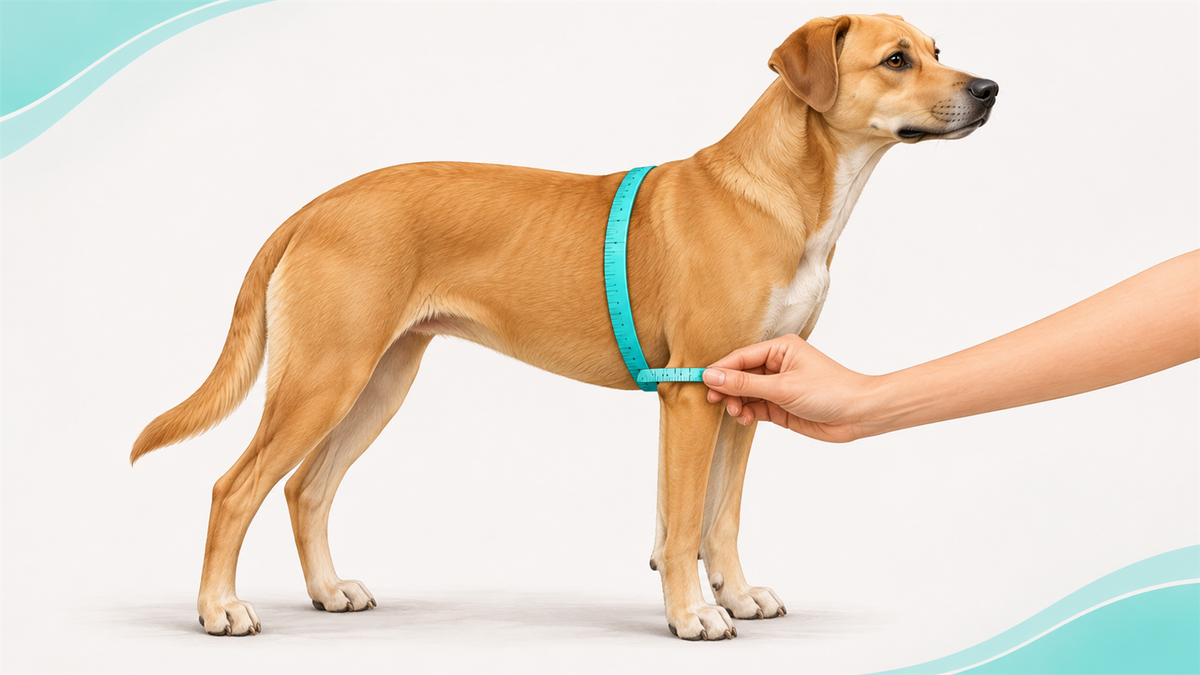
Measure the chest girth and any other areas required by the manufacturer. Our dog harness measuring guide explains how to record measurements and compare size charts.
After adjusting the harness, check that:
- Straps and panels lie flat.
- Buckles close fully without pinching.
- The harness does not press into the throat or rub behind the front legs.
- Your dog can walk, turn, sit and lie down naturally.
- The harness stays reasonably centered as your dog moves.
No single clearance check confirms the whole fit. Follow the model’s fitting instructions and observe your dog in motion.
Compare Adjustment Points and Harness Shape
Adjustable does not mean one size fits every dog.
Check where the harness adjusts and whether the stated ranges accommodate your dog’s measurements. A chest strap may adjust while the neck opening or front panel remains fixed.
Body shape also matters. A dog with a narrow neck and deep chest may fit differently from a dog with a broader, more compact build, even when their chest measurements are similar.
If you cannot achieve a stable fit without tightening one area too much, consider a different harness shape rather than continuing to tighten the straps.
Does a No-Pull Harness Stop Pulling?
No-pull is a product description, not a promise that your dog will immediately walk on a loose leash.
A harness may change how pulling is managed, but your dog still needs opportunities to learn the behavior you want. Rewarding steps taken with a loose leash helps make that behavior worth repeating.
The RSPCA’s loose-leash walking guidance emphasizes rewarding relaxed walking. Keep practice manageable and seek help from a qualified reward-based trainer if pulling is difficult to handle.
Avoid choosing equipment solely because it promises an instant fix.
Why a Pulling Harness Is Different
A pulling or sled harness is designed for an activity in which the dog applies tension to move a load or pull ahead. Everyday loose-leash training has a different goal.
Do not assume a pulling harness is the best walking choice simply because your dog is strong. Equally, a general walking harness should not be assumed suitable for sledding or weight pulling.
Use the manufacturer’s stated purpose to guide your choice:
| Intended activity | Equipment to investigate |
|---|---|
| Everyday walks and leash practice | A correctly fitted walking harness |
| Sledding or another pulling activity | A harness specifically designed for that activity |
| Assisted standing or mobility | A purpose-designed support harness, selected with appropriate professional guidance |
The word “tactical” does not make a harness suitable for every activity in this table.
Introduce the Harness Gradually
Before beginning an outdoor training session, give your dog time to become comfortable with the equipment.
Let your dog investigate the harness, reward calm interaction and introduce putting it on in small steps. Avoid forcing the process if your dog freezes or tries to move away.
Once it is fitted, begin with comfortable movement indoors before progressing to more distracting places. Dogs Trust provides a step-by-step guide to introducing a harness.
Check the fit again after movement and inspect the straps, stitching and hardware regularly.
A Buying Checklist for Leash Training
Before adding a harness to your cart, confirm the following:
- Purpose: It is described as suitable for walking and your intended activity.
- Sizing: All required measurements fit the product chart.
- Attachments: Leash connection points are clearly identified.
- Adjustment: The available ranges suit your dog’s proportions.
- Movement: The shape allows comfortable movement when correctly fitted.
- Package contents: You know whether a leash or other accessories are included.
Clear specifications are more useful than a long list of broad performance claims.
Frequently Asked Questions
Is a front-clip harness always better for training?
No. A front attachment may help with managing some dogs that pull, but suitability depends on fit, the individual dog and how the equipment is used. It does not replace training.
Can I use a back-clip harness for leash training?
Yes. Loose-leash practice is not limited to one attachment style. Choose suitable equipment and teach the walking behavior you want through consistent, reward-based practice.
Should I choose a tactical harness for a strong dog?
Do not choose by the label alone. Check the intended use, fit, attachment instructions and any supported strength specifications. A tactical-style harness is not automatically a pulling harness.
Do I need a harness-and-leash set?
Not necessarily. Check that your leash is compatible with the harness’s designated attachment hardware. A matching set can be convenient, but confirm what is included before ordering.
What if the harness twists during a walk?
Pause and check the size, strap adjustment and attachment instructions. If it continues to rotate or rub despite correct adjustment, a different shape may be more suitable.
Choose by Fit, Function and Clear Specifications
Compare the walking styles in our Dog Harnesses collection, checking each product’s measurements, adjustment points and designated leash attachments.
If you need help understanding an Eagerlive product’s specifications, contact service@eagerlive.com with the product link and your dog’s measurements. Choose equipment that fits the activity, then build better walking habits through patient practice.